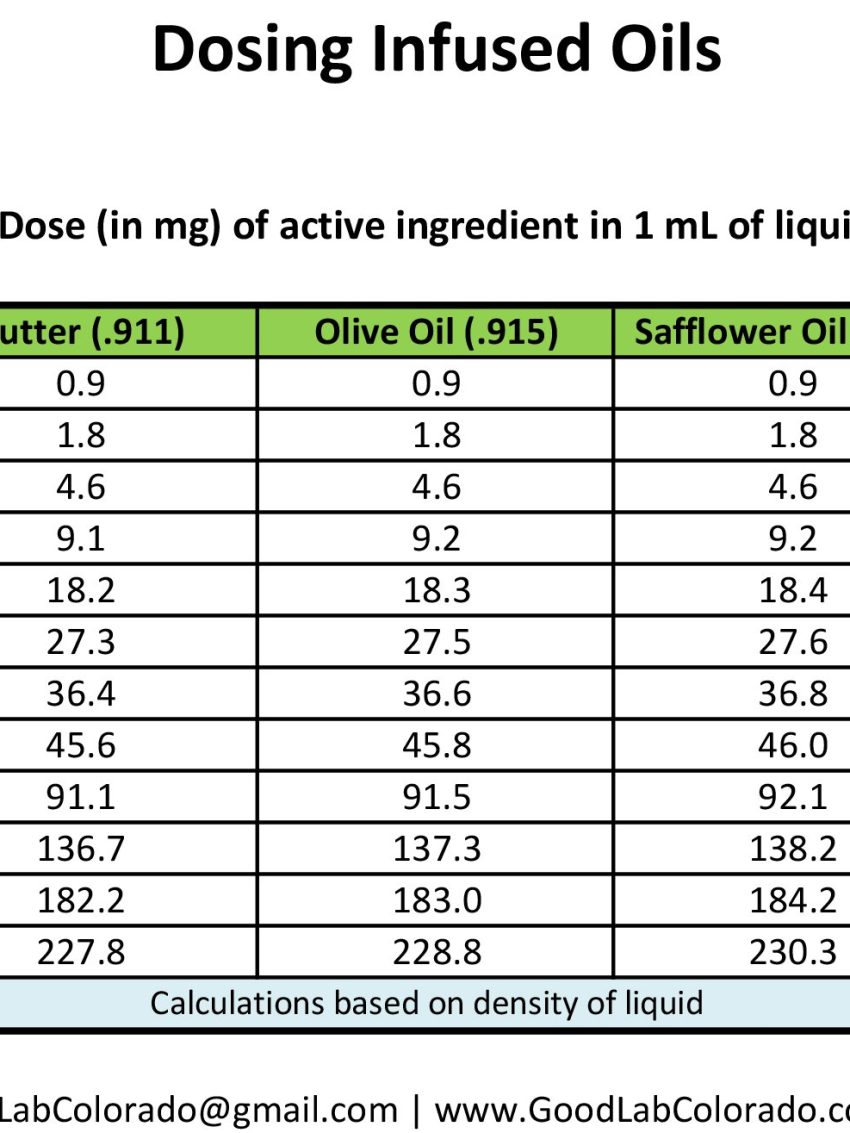
Converting milliliters to milligrams can be a puzzling task for many. To simplify this calculation, all you need to do is know the density of the substance in question. By multiplying the volume in milliliters by the density in milligrams per milliliter, you can easily find the equivalent weight in milligrams. Understanding this basic concept opens up a world of possibilities when it comes to practical applications in various fields. Let’s delve deeper into this conversion process and explore its significance.

Understanding ml to mg Conversion: A Simple Guide for Kids
The Basics of Measurement: What is ml and mg?
When it comes to understanding measurements, you may have heard of milliliters (ml) and milligrams (mg). But what do these terms really mean? Let’s break it down in a fun and easy way!
Milliliters (ml) are used to measure liquids, like water, juice, or milk. Imagine your favorite drink poured into a small cup – that’s one way to think of a milliliter. On the other hand, milligrams (mg) are used to measure the weight or mass of solids, like sugar or flour. Picture a tiny grain of sugar – that’s roughly one milligram.
Why Convert ml to mg?
Sometimes, you may need to convert measurements from milliliters to milligrams. This conversion can be necessary when you’re following a recipe, taking medicine, or conducting a science experiment. Understanding how to convert ml to mg can come in handy in various everyday situations.
The Conversion Formula
Converting milliliters to milligrams involves a simple formula. To convert, you need to know the density of the substance you are measuring. Density tells us how tightly packed the particles in a substance are. Different substances have different densities, which affects how much they weigh for a given volume.
The formula to convert milliliters to milligrams is:
\[ \text{milligrams (mg)} = \text{milliliters (ml)} \times \text{density (mg/ml)} \]
For instance, if you have 5 milliliters of liquid with a density of 0.9 mg/ml, the calculation would be:
\[ \text{mg} = 5 \text{ ml} \times 0.9 \text{ mg/ml} = 4.5 \text{ mg} \]
Practical Examples
Let’s dive into some practical examples to understand ml to mg conversions better.
Example 1: Water
Water has a density of 1 mg/ml, which means 1 milliliter of water weighs 1 milligram. If you have 10 milliliters of water, how many milligrams do you have?
Using the formula:
\[ \text{mg} = 10 \text{ ml} \times 1 \text{ mg/ml} = 10 \text{ mg} \]
So, 10 milliliters of water is equal to 10 milligrams.
Example 2: Sugar
Sugar has a density of 0.85 mg/ml. If you have 15 milliliters of sugar, how many milligrams is that?
Applying the formula:
\[ \text{mg} = 15 \text{ ml} \times 0.85 \text{ mg/ml} = 12.75 \text{ mg} \]
So, 15 milliliters of sugar would weigh 12.75 milligrams.
Real-Life Applications of ml to mg Conversion
Understanding ml to mg conversions can be useful in various real-life scenarios. Let’s explore some practical applications:
Cooking and Baking
When following recipes, you may encounter ingredients listed in milliliters that need to be converted to milligrams for accurate measurements. This is especially important in baking, where precise measurements can affect the outcome of your delicious treats.
Medication Dosage
Doctors and pharmacists often prescribe medications in milligrams, but some liquid medications are measured in milliliters. Being able to convert between the two units helps ensure you take the correct dosage as prescribed.
Science Experiments
In science class, you may come across experiments that require measuring liquids or solids. Understanding ml to mg conversions can help you accurately measure and mix substances for your experiments.
Practice Makes Perfect: Try Some Conversions
To get more comfortable with ml to mg conversions, you can practice with different examples. Here are a few conversion exercises for you to try out:
1. Convert 7 ml of juice (density = 0.95 mg/ml) to milligrams.
2. If you have 20 ml of oil (density = 0.92 mg/ml), how many milligrams is that?
3. Calculate the weight in milligrams of 12 ml of honey (density = 1.4 mg/ml).
Remember, the more you practice, the better you’ll get at converting ml to mg effortlessly!
In conclusion, understanding how to convert milliliters to milligrams can be a valuable skill in various everyday situations. Whether you’re cooking, taking medication, or conducting experiments, knowing how to convert between these units can help you make accurate measurements. So, the next time you come across ml to mg conversions, remember the simple formula and practice to become a pro at converting measurements!
Dose Conversion #1 – mg to mL Using Label
Frequently Asked Questions
How do I convert milliliters (ml) to milligrams (mg)?
To convert milliliters to milligrams, you need to know the density of the substance in question. Once you have the density, you can multiply the volume in milliliters by the density in milligrams per milliliter to get the equivalent in milligrams.
Why is it important to convert ml to mg in certain situations?
Converting ml to mg is crucial when dealing with medication dosages, especially for liquid medications where the concentration is given in milligrams per milliliter. It ensures accurate dosing and helps prevent errors in administration.
Can the conversion factor from ml to mg vary for different substances?
Yes, the conversion factor for ml to mg can vary depending on the density of the substance. Different substances have different densities, so it is essential to know the specific density of the substance you are working with to perform an accurate conversion.
Is there a simple formula to convert ml to mg without knowing the substance’s density?
Without knowing the density of the substance, you cannot directly convert ml to mg. It is crucial to have the density information to perform the conversion accurately. Otherwise, the conversion may lead to incorrect results.
Final Thoughts
Converting between milliliters (ml) and milligrams (mg) is essential for accurate medication dosing. To convert ml to mg, it is crucial to know the density of the substance being measured. Always double-check your conversions to avoid dosage errors. Remember, ml measures volume while mg measures weight. In conclusion, mastering the conversion from ml to mg is a vital skill for anyone involved in administering medications.